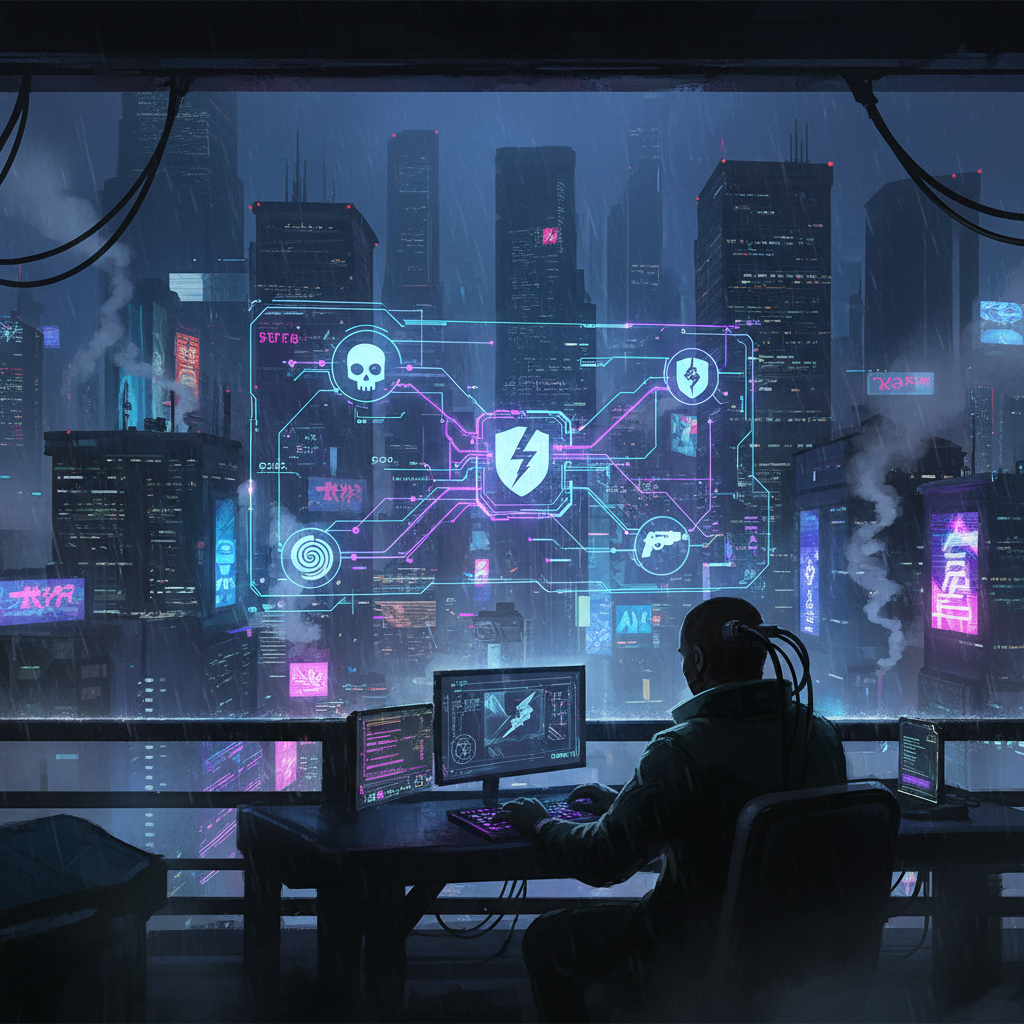
Introduction to Quickhacks
Quickhacks are essential abilities for Netrunners in Cyberpunk 2077, allowing them to manipulate enemies and environments. To effectively use quickhacks, a Cyberdeck is required. Cyberdecks enable the user to quickhack individuals and devices, as well as breach networks. Each Cyberdeck includes pre-installed quickhacks, a limited number of slots for equipped quickhacks, and a specific amount of RAM. RAM is a resource consumed when performing quickhacks, with the cost varying based on factors like cyberware, Perks, and level. Used RAM regenerates outside of combat. Increasing your Intelligence attribute, certain cyberware, Perks, and higher-quality Cyberdecks can boost your maximum RAM.
Quickhacks can be uploaded in a queue onto an enemy. Many quickhacks have special effects that influence subsequent queued hacks, such as making them untraceable. New quickhacks can be acquired from vendors, found in the world, earned as rewards, collected after uploading the Datamine daemon to Access Points, or crafted using Crafting Specs. Crafting Specs can also be purchased, found, or unlocked in the quickhacking Skill tree.
S-Tier Quickhacks: Elite Choices
These quickhacks are considered top-tier due to their significant impact in various scenarios:
- Camera Control (Control Quickhack): This quickhack grants full control over cameras within a network. It is excellent for scouting areas for enemies or threats, and for uploading other quickhacks onto hard-to-reach enemies.
- Contagion (Combat Quickhack): Uploads a chemical damage-over-time virus. When the affected enemy dies, the virus spreads to up to four other enemies within 8 meters. This quickhack is potent for clearing groups of enemies and can be queued before Overheat for an explosion dealing massive damage.
- Cripple Movement (Control Quickhack): Disables an enemy’s movement and cyberware supporting movement and dodging. This provides a direct damage boost for melee weapons and synergizes well with melee-focused builds.
- Cyberware Malfunction (Control Quickhack): Disables an enemy’s cyberware and increases all damage dealt to them. Disabling enemy cyberware makes fights easier and pairs effectively with Short Circuit against high-threat targets.
- Overheat (Combat Quickhack): Sets an enemy on fire, inflicting thermal damage-over-time. It can melt enemy armor, effectively increasing subsequent damage. When combined with the Hack Queue perk, queuing this after Contagion can result in area-of-effect damage.
- Short Circuit (Combat Quickhack): Fries a target’s internal systems, dealing substantial damage. It can deal massive damage or neutralize an enemy instantly. Against bosses, it is more effective when queued after multiple Cyberware Malfunctions.
- System Collapse (Ultimate Quickhack): Cripples an enemy’s nervous system, knocking them out silently. This is crucial for stealthy Netrunner gameplay and is particularly useful when an enemy Netrunner is present.
A-Tier Quickhacks: Highly Effective Options
These quickhacks are highly effective and valuable for a Netrunner’s arsenal:
- Distract Enemies (Distract Quickhack): Hacks nearby devices to lure enemies away from their positions. This quickhack is invaluable for bypassing enemies undetected or setting up stealth takedowns.
Understanding Quickhack Types
Quickhacks are categorized by their primary function:
- Covert Quickhacks: Used for infiltration, evading, or escaping enemy detection. An example is Ping, which reveals enemies and devices on the local network.
- Combat Quickhacks: Designed for dealing damage once enemies are aware of your presence. Overheat and Short Circuit are examples.
- Control Quickhacks: Used to impede opponents in combat, often decisive against bosses and mini-bosses by disabling their cyberware. Cyberware Malfunction and Cripple Movement fall into this category.
- Ultimate Quickhacks: The most powerful programs, though they typically have higher RAM costs and longer upload times. System Collapse is an ultimate quickhack.
- Antipersonnel Quickhacks: Cyberdecks have dedicated slots for these quickhacks, which can be customized to fit your playstyle.
Every Cyberdeck also comes with Breach Protocol pre-installed, allowing it to penetrate networks and upload daemons. The ICEpick daemon, also pre-installed, decreases the RAM cost of all quickhacks used on enemies and devices connected to the network after successful upload via Breach Protocol. New daemons can be unlocked in the Breach Protocol Skill tree.
Access Points are physical ports found in the environment that grant access to local networks. Using the Ping quickhack on a connected device or person can reveal them. Successfully uploading a Datamine daemon into an Access Point through Breach Protocol can yield money, quickhack crafting components, or sometimes a new quickhack.
FAQ
What is a Cyberdeck and why do I need one for quickhacks? A Cyberdeck is a crucial piece of cyberware that enables you to use quickhacks. It provides the RAM required to execute quickhacks, comes with pre-installed quickhacks, and offers slots for additional ones.
How do I get new quickhacks in Cyberpunk 2077? New quickhacks can be purchased from vendors, found throughout the game world, earned as rewards for completing activities, collected after uploading the Datamine daemon to Access Points, or crafted using Crafting Specs.
What is RAM and how does it relate to quickhacks? RAM is a resource consumed when you upload a quickhack to an enemy or device. Its cost can be influenced by cyberware, Perks, and your level. RAM regenerates outside of combat, and your maximum RAM can be increased through a higher Intelligence attribute, certain cyberware, Perks, and using a higher-quality Cyberdeck.
Can I queue multiple quickhacks on an enemy? Yes, quickhacks can be uploaded in a queue onto an enemy. Many quickhacks have special effects that can influence subsequent hacks in the queue, potentially making them untraceable or causing combined effects.
What is the purpose of Breach Protocol? Breach Protocol, pre-installed on every Cyberdeck, allows you to penetrate networks and upload powerful programs called daemons. The ICEpick daemon, for example, reduces the RAM cost of quickhacks on connected enemies and devices after a successful upload.